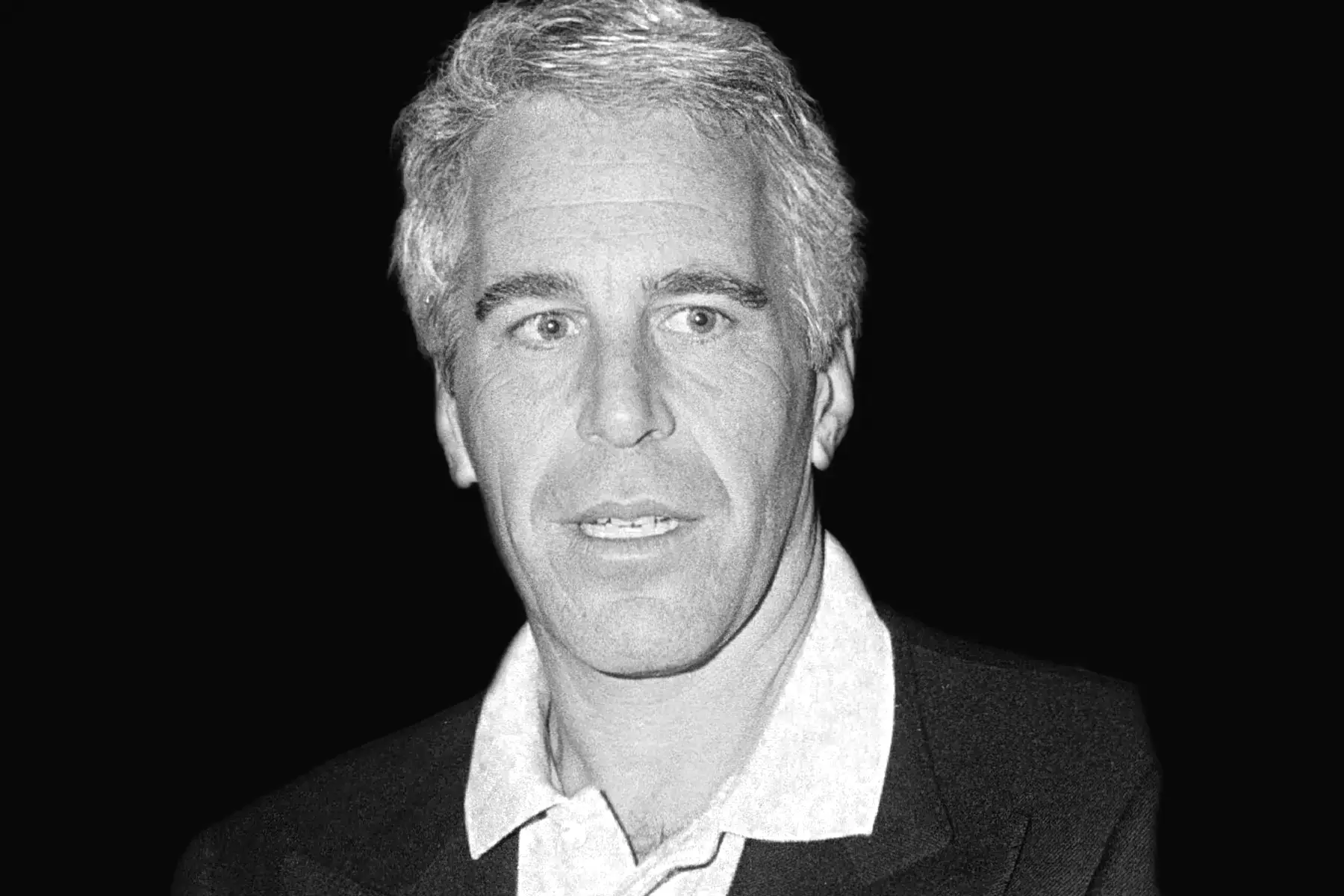
Special Investigation · JANUARY 30, 2026

The Epstein Files

Every name. Every document. Every connection the DOJ buried in 3.5 million pages of noise.

His son stopped breathing. He stayed in New York.

In his bestselling book Outlive, Dr. Peter Attia describes the worst moment of his life.

His infant son’s heart stopped. His wife Jill was alone in the ambulance. She performed CPR on his tiny body until the paramedics arrived. The baby’s eyes had rolled back. He was blue. No heartbeat.

Jill stayed in the hospital for four days. She begged Peter to come home. He didn’t. He was in New York, he wrote, doing “important work.”

He didn’t come home for ten days.

The Epstein files show what that “important work” was: scheduling dinner with Jeffrey Epstein.

The email is dated July 12, 2017 — the same week as his son’s cardiac arrest. Epstein writes: "930?" Attia replies: "Sure. I can come earlier, also, if you have a hard stop at 10."

— DOJ Release EFTA_R1_01880529

Other emails show Attia staying at Epstein’s apartment. Writing him “Pussy is low carb.” Telling a convicted child sex trafficker: “The life you lead is so outrageous, and yet I can’t tell a soul.”

When he finally left Epstein’s apartment, he emailed the housekeeper: “See you next time, hopefully JE in town when I’m back in 2 weeks. I go into JE withdrawal when I don’t see him…”

Attia was still emailing Epstein after the 2018 Miami Herald exposé that detailed Epstein’s crimes. His wife kicked him out in February 2018.

— DOJ Release EFTA00330605

He wrote a book about longevity. He said the story about his son was the worst thing he’d ever done. He never mentioned who he was having dinner with.

Peter Attia is one name in these files. There are hundreds more.

And the deeper you go, the worse it gets.

Investigation: The Epstein Files — The Complete Unsealed Record
$9.99

Access after purchase · 30-day money-back guarantee

They weren't friends. They were assets.

These aren’t rumors. These are flight logs, sworn testimony, DOJ-released emails, and court filings.

But notice what’s happening. You’re looking at the names. Everybody looks at the names. That’s by design.

The names are the bait. The real story is what Epstein actually was — and what he was doing with all of them.

That story starts with a simple question nobody can answer.

Archival photo 1.

1,000+ survivors · 0 co-conspirators charged

Where did a fake financier get a billion dollars?

Jeffrey Epstein had no clients. No real trades. No verifiable track record of any kind.

Nassim Nicholas Taleb — one of the most respected financial thinkers alive — has said publicly that Epstein’s financial career didn’t exist.

And yet: the Manhattan townhouse. The private island. The 727 jet. The ranch in New Mexico. Between 1999 and 2018, his two main entities received over $800 million in revenue — most of it from just two men. Les Wexner paid him $200 million. Leon Black paid $170 million. He ran everything through the US Virgin Islands at an effective tax rate of 4%.

For what?

Nobody has ever credibly explained what service Epstein provided that was worth $800 million.

Unless the service wasn’t financial.

In 2016, Epstein pitched a plan to a Saudi royal advisor involving the creation of two digital currencies.

At least 20 tech executives appear in the files. Reid Hoffman sent gifts to his home — including ice cream “for the girls.” Sergey Brin emailed Ghislaine Maxwell about meeting him. Peter Thiel appears in thousands of documents.

Epstein wasn’t collecting famous friends. He was running an operation. The sex trafficking created the leverage. The leverage created the access. The access created the money.

And the money? The money went places nobody expected.

This is page one. There are twenty-six chapters. Read the full record →

Investigative report photo.
“Epstein wasn’t a financier. He was a toll booth between Gulf state money and Silicon Valley — and the trafficking was the insurance policy that made sure nobody walked away.”

Excerpt from Chapter 3

A convicted sex trafficker funded the developers who wrote Bitcoin's code.

In 2015, the Bitcoin Foundation went bankrupt. Bitcoin’s core developers needed a new home and new funding.

They found it at MIT’s Digital Currency Initiative. The head of that initiative, Joi Ito, thanked his primary funder — saying the money “allowed us to move quickly and win this round” in recruiting Bitcoin’s core developers.

That primary funder was Jeffrey Epstein.

Epstein invested $500,000 in Blockstream — the company that shaped Bitcoin’s technical direction during the most critical period in its history.

Blockstream pushed Bitcoin away from being “digital cash” (the original vision — actually use it as currency) and toward “digital gold” (just hold it, don’t spend it). Critics have accused Blockstream of deliberately crippling Bitcoin’s on-chain scaling.

Blockstream co-founder Austin Hill emailed Epstein about hiding investments through Joi Ito and using “tumbled bitcoin transactions” for what he called “total deniability.” He referenced “Snowden’s escape to Russia level counter-surveillance” from Blockstream’s own network.

— DOJ Email Releases via MIT Media Lab investigation

Blockstream’s co-founders were invited to Epstein’s private island. Epstein separately invested $3 million in Coinbase through Brock Pierce.

The direction of the world’s most important cryptocurrency may not have been organic. It may have been steered by an intelligence-connected sex trafficker’s money — during the exact window when Bitcoin’s future was being decided.

And that wasn’t even his biggest financial play.

Document image 1.

He may have lit the match that burned down the global economy.

In August 2006, Epstein invested $57 million in Bear Stearns’ most toxic hedge fund — the High-Grade Structured Credit Strategies Enhanced Leverage Fund. It was loaded with collateralized debt obligations: the exact financial instruments that would destroy the world economy.

At 17:1 leverage, his $57 million stake controlled $1 billion in exposure.

In April 2007, an investor holding exactly $57 million requested a redemption. To meet that redemption, the fund had to sell CDO assets. Those sales forced a repricing. The repricing triggered a cascade.

The fund collapsed in July 2007. Bear Stearns collapsed in March 2008. Then everything collapsed.

Epstein also chaired Liquid Funding Ltd — a Bermuda-based company partially owned by Bear Stearns, loaded with the same mortgage-backed securities and CDOs that caused the crisis.

— ICIJ Paradise Papers · SEC filings · Congressional testimony

A man with fabricated financial credentials. No real clients. No real trades. He invested in the most toxic financial products on earth — and may have pulled the first domino that collapsed the global economy.

And while the world burned? He was negotiating a plea deal for sex crimes with minors. The prosecutor — Alexander Acosta — later said he’d been told Epstein “belonged to intelligence” and was “above his pay grade.”

Epstein got 13 months. The economy got 2008.

JPMorgan later settled with him privately — reportedly paying him a portion of the $70 million he demanded.

He met 4chan’s creator. The next day, /pol/ was born.

On October 20, 2011, a venture capitalist named Boris Nikolic — a former advisor to Bill Gates — emailed Epstein a Wikipedia link with a note: “There is a cool guy (KID) that you should meet. He is only 23.”

The kid was Christopher Poole. The founder of 4chan.

Epstein met him. He “drove him home.”

October 24, 2011 — Nikolic to Epstein: “How did you like moot?” Epstein: “I liked moot a lot. I drove him home, he is very bright.” Nikolic: “He is great… he is one of the greatest hackers.”

— DOJ Release EFTA02024168

Within days, 4chan launched /pol/ — “Politically Incorrect” — the board that would birth Gamergate, the alt-right, Pizzagate, QAnon, and the online machine that helped elect a president.

Here’s what makes this strange: Poole had already shut down the predecessor board, /new/, in January 2011 — specifically because it became a neo-Nazi hub. He told users “anybody who used it knows exactly why it was removed.”

Then, after meeting a convicted sex offender, he created a board designed from the start to be exactly the same kind of space.

Nearly 100 follow-up emails show Epstein’s team trying to schedule more meetings with Poole. Poole kept canceling.

By 2017, Epstein and Steve Bannon were messaging constantly. They brainstormed using cryptocurrency to fund a “populist/nationalist coalition” across Europe. Bannon bragged he was “advisor” to Salvini, the AfD, Orbán, and Farage.

In March 2019, Epstein texted Bannon from the Louvre: “Now at the pyramid. With the entire government. What are your plans?”

The conspiracy theories that made it impossible to have a serious conversation about elite pedophile networks — Pizzagate, QAnon — emerged from exactly the platforms and movements that Epstein’s network was connected to.

Coincidence? Maybe. But the emails are real. The timeline is real. And the question is now yours to answer.

“Release everything” became “it’s a big hoax” — the moment his name showed up.

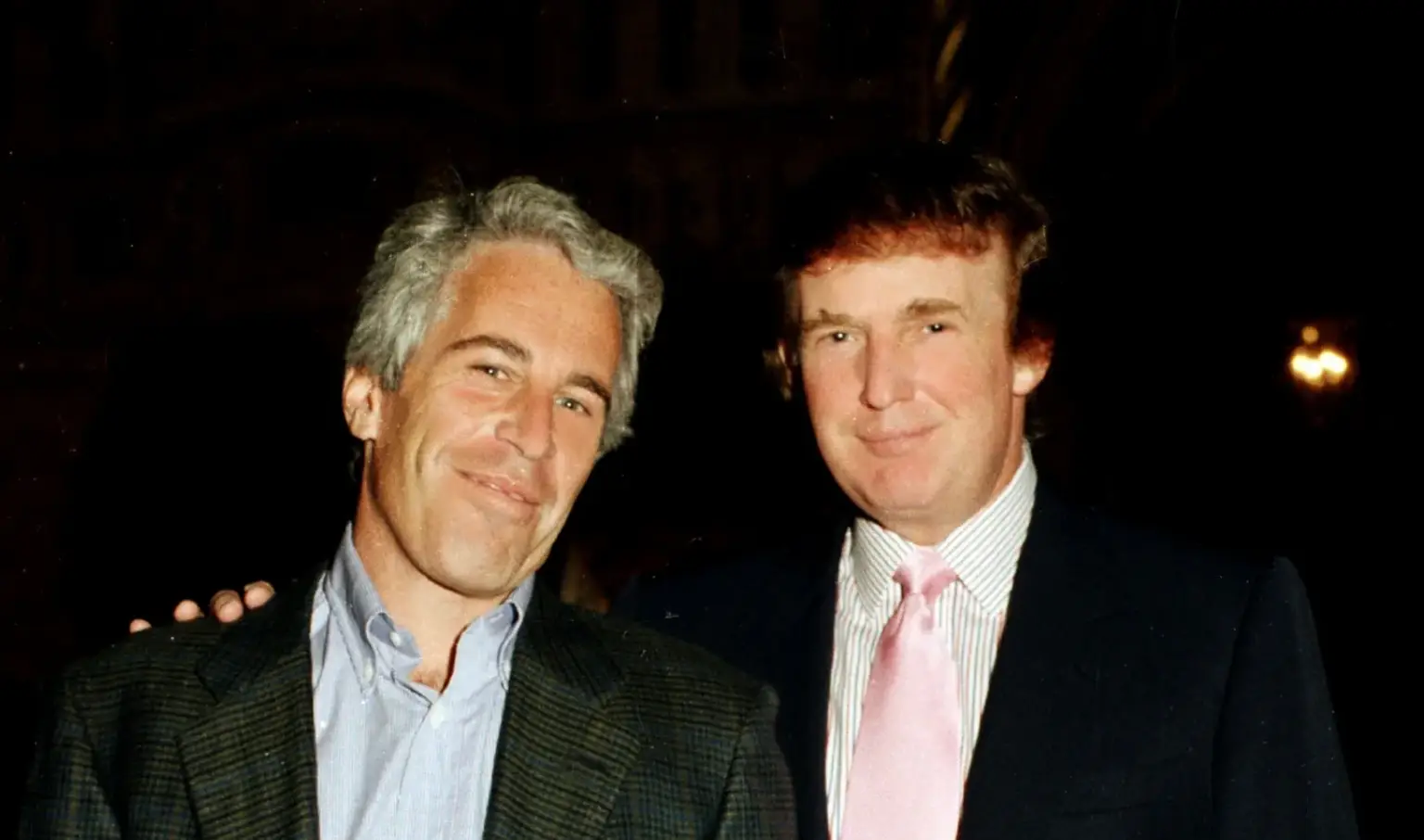
In 2024, Donald Trump campaigned on releasing the Epstein files. He told Fox News he’d do it. He told Lex Fridman he’d “probably” release the client list. The Epstein Files Transparency Act passed 427-1 in the House. Unanimous in the Senate. He signed it.

Then, in May 2025, Attorney General Pam Bondi briefed him. His name was in the files. Over 30,000 times.

Congressman Jared Moskowitz put it this way: Trump’s name appears more often in the Epstein files than Harry Potter’s name appears in the seven books about Harry Potter.

Within weeks, “release everything” became “it’s a big hoax.”

Kash Patel — who in 2023 said the list wasn’t out “because of who’s on that list” — became FBI Director. During congressional testimony, he repeatedly refused to confirm whether Trump’s name was in the files. Every Republican on the Judiciary Committee except Thomas Massie voted to block subpoenas for $1.5 billion in suspicious bank transactions.

— Congressional testimony, September 2025 – February 2026

The DOJ released 3.5 million pages — but withheld 2.5 million more. They included 550+ fully redacted pages. An entire 119-page grand jury document was completely blacked out. An 86-page prosecution memo remains hidden. A draft indictment of co-conspirators has never been released.

Congress members were allowed to review the unredacted files — alone. No staff. No computers. Handwritten notes only. Across 3.5 million pages.

And then: the DOJ published the full names and photographs of 43 victims — while redacting the names of the powerful men accused alongside them.

Attorneys for 200+ victims called it “the single most egregious violation of victim privacy in one day in United States history.”

The DOJ called it a “mistake.”

February 12, 2026

Two days ago, Attorney General Bondi sat in front of the Senate. Epstein survivors sat behind her.

She refused to turn around and face them.

She refused to apologize for leaking their identities. When asked about the cover-up, she said: “This is so ridiculous, that they are trying to deflect from all the great things Donald Trump has done.”

Congressman Ted Lieu responded: “There are over 1,000 sex trafficking victims. And you have not held a single man accountable. Shame on you.”

Then Thomas Massie caught something on live camera: Les Wexner’s name had been redacted from an FBI document listing co-conspirators in child sex trafficking. It was unredacted within 40 minutes.

Over 1,000 survivors. Zero co-conspirators charged. Not one survivor has been contacted by the DOJ.

When the survivors in the hearing room were asked to raise their hand if the DOJ had reached out to them — every single hand went up to say no.
They buried it in 3.5 million pages. We organized it into one.

Every fact you just read is sourced from court filings, DOJ releases, congressional testimony, or verified reporting.

But it’s scattered. Deliberately. Across millions of documents, hundreds of news cycles, and a media ecosystem engineered to exhaust you before you see the full picture.

This book pieces it together.

26 chapters. Every claim sourced. Every name in context. The money, the network, the technology, the politics, the cover-up — from the first domino to last week’s hearing.

Each chapter follows the same rhythm: what people claim, what the documents actually show, what’s verified, what’s still open. You’ll be trained to spot the difference between evidence and noise — and you’ll never read an Epstein headline the same way again.

Not conspiracy. Not vibes. Just the record.

What you'll find inside

  1. 26 chapters covering the money, network, technology, politics, and cover-up
  2. Every claim sourced from DOJ releases, court filings, and testimony
  3. Names in context — not just lists
  4. A clean timeline from first domino to last week’s hearing
  5. Primary-document excerpts with reference IDs
  6. A source index for independent verification
  7. Evidence vs noise framework for each claim
  8. Appendix-style exhibit visuals and key releases
  9. Access after purchase
  10. 30-day money-back guarantee

30-Day Money-Back Guarantee

If you're unsatisfied for any reason within 30 days, email us and we'll refund you. No questions.

The Epstein Files:
The Complete Unsealed Record

Every chapter a revelation. Every fact sourced. One sitting is all it takes to see the whole picture.

Investigation: The Epstein Files — The Complete Unsealed Record
$9.99

Access after purchase · 30-day money-back guarantee